How OT and PT Support Wound Healing Through Positioning, Off-Loading, Edema Management, and Functional Rehabilitation
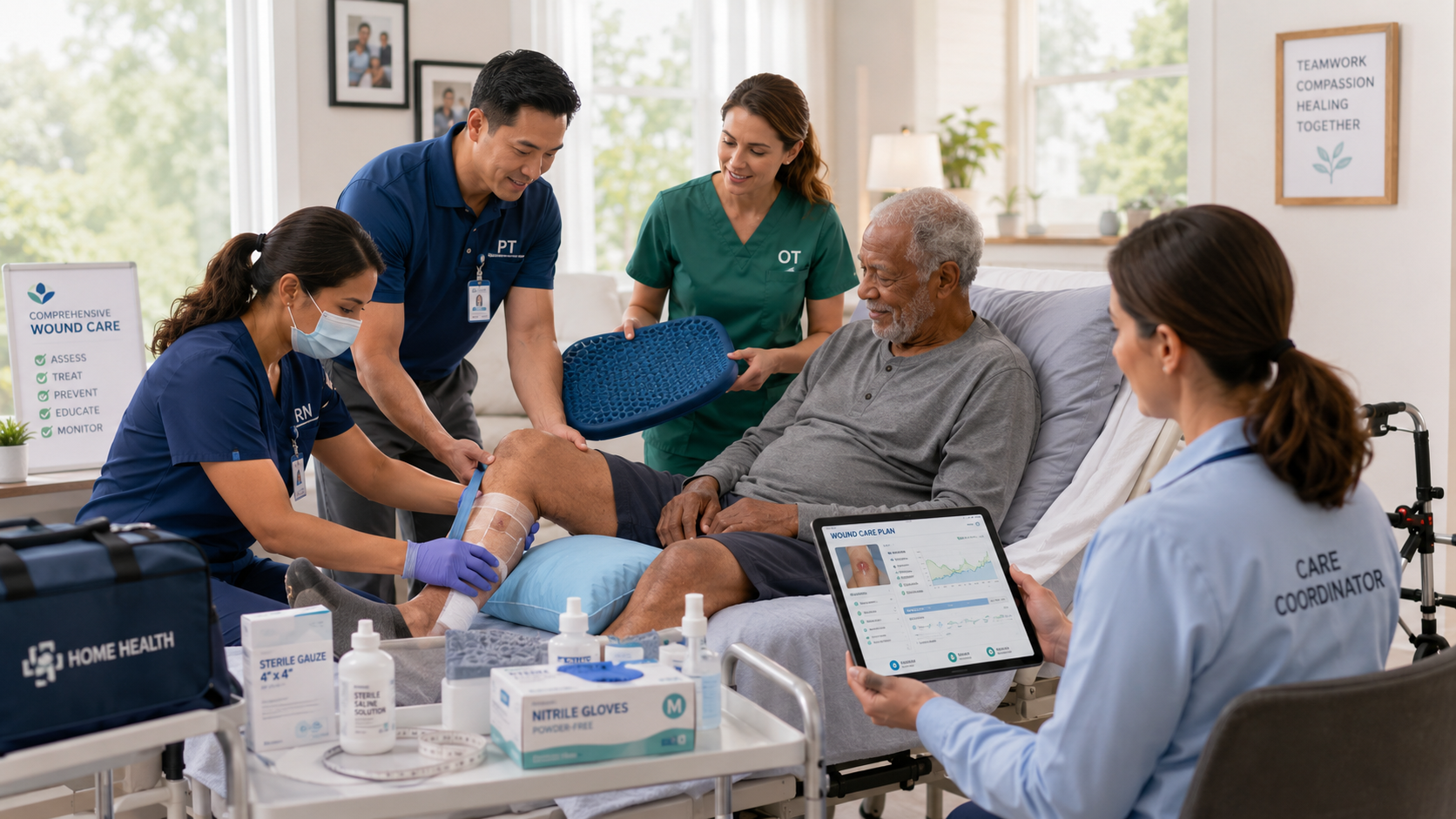
Wound care in home health is principally a nursing domain — the assessment, cleaning, debridement, and dressing changes that constitute direct wound management belong to the registered nurse and the wound care specialist. But nursing-centric wound care that does not include physical and occupational therapy contributions creates an incomplete clinical approach for the home health patient with complex chronic wounds — pressure injuries, diabetic foot ulcers, venous leg ulcers, and arterial insufficiency wounds — whose wound healing is directly dependent on the functional, positional, and off-loading factors that therapy disciplines address most specifically.
Pressure injury prevention and management illustrates the therapy contribution most clearly. Pressure injuries occur when the patient’s mobility and repositioning capacity are insufficient to relieve tissue loading at vulnerable anatomical sites. The nursing response to established pressure injuries is appropriate and essential: wound assessment, wound bed preparation, dressing selection, and infection surveillance. But the therapy response addresses the fundamental mechanism: the patient’s functional mobility, the positioning strategies that distribute pressure off vulnerable sites, the seating and mattress surfaces that reduce interface pressure, and the caregiver training that ensures therapeutic repositioning happens consistently across all hours of the day — not just during nursing visits.
Off-loading for diabetic foot ulcers is one of the clearest examples of PT clinical contribution to wound healing. Diabetic foot ulcers — the leading cause of non-traumatic lower extremity amputation in the United States — heal primarily through consistent off-loading of pressure from the wound site, allowing tissue repair to proceed without the repetitive mechanical trauma that ambulation without off-loading produces. PT assessment of the patient’s gait pattern, the specific pressure distribution during ambulation, and the patient’s adherence to off-loading recommendations produces off-loading plans that are both clinically appropriate and functionally sustainable.
Edema management is a therapy contribution to wound healing with particularly significant impact for patients with venous leg ulcers, where chronic venous insufficiency produces the edema, skin changes, and inflammatory environment that both generate the ulcer and impair its healing. The therapy team’s role centers on compression — the primary treatment for venous insufficiency — and on exercise and positional interventions that support venous return. Compression garment selection and fitting, exercise programs that specifically engage the calf muscle pump, leg elevation positioning that promotes fluid return, and skin care practices that protect the fragile skin surrounding venous ulcers all represent therapy contributions that directly influence healing trajectory.
Occupational therapy contributes to wound care primarily through functional assessment and ADL adaptation that reduces the specific activities and postures that impair wound healing. The patient with a sacral pressure injury whose wound healing requires avoiding supine positioning faces specific challenges in sleeping, resting, and managing daily hygiene that require OT assessment of adapted functional strategies. The patient with a diabetic foot ulcer who works at a job requiring prolonged standing requires OT assessment of workplace modifications, activity pacing, and foot care self-management strategies that balance wound healing requirements with functional life demands.
Nutritional risk awareness is a clinical dimension where therapy clinicians contribute to wound care by identifying and communicating factors that impair healing. Adequate protein intake, micronutrient sufficiency, and caloric adequacy are essential substrates for tissue repair — and wound healing is frequently impaired in the home health population by the nutritional deficiencies that chronic illness, poor appetite, social isolation, and functional limitations of self-care produce. Therapists who recognize the signs of nutritional compromise — unintentional weight loss, muscle wasting, poor wound healing trajectory — and communicate observations to the nursing and medical team prompt the dietary consultation that addresses a modifiable wound healing barrier.
Caregiver competency for wound-related care tasks is the wound care contribution that extends therapy impact across the full week. The repositioning schedules, compression garment application, foot care routines, and nutritional support activities that happen between professional visits determine whether professional visit outcomes are sustained or reversed. PT and OT caregiver training that includes return demonstration of specific techniques, assessment of caregiver compliance barriers, and documentation of demonstrated competency rather than mere instruction provision creates the community infrastructure for wound healing that professional visits alone cannot sustain.
Humane Care Therapy Inc. provides OT and PT staffing that supports comprehensive wound care coordination for home health agencies across Houston and Southeast Texas. Contact us at (281) 619-3771 or visit humanecaretherapy.com.
Related HCT staffing services: Occupational Therapy and Physical Therapy staffing in Houston.