Why a Therapist-Owned Company Takes Clinician Musculoskeletal Health and Occupational Safety as Seriously as Patient Outcomes
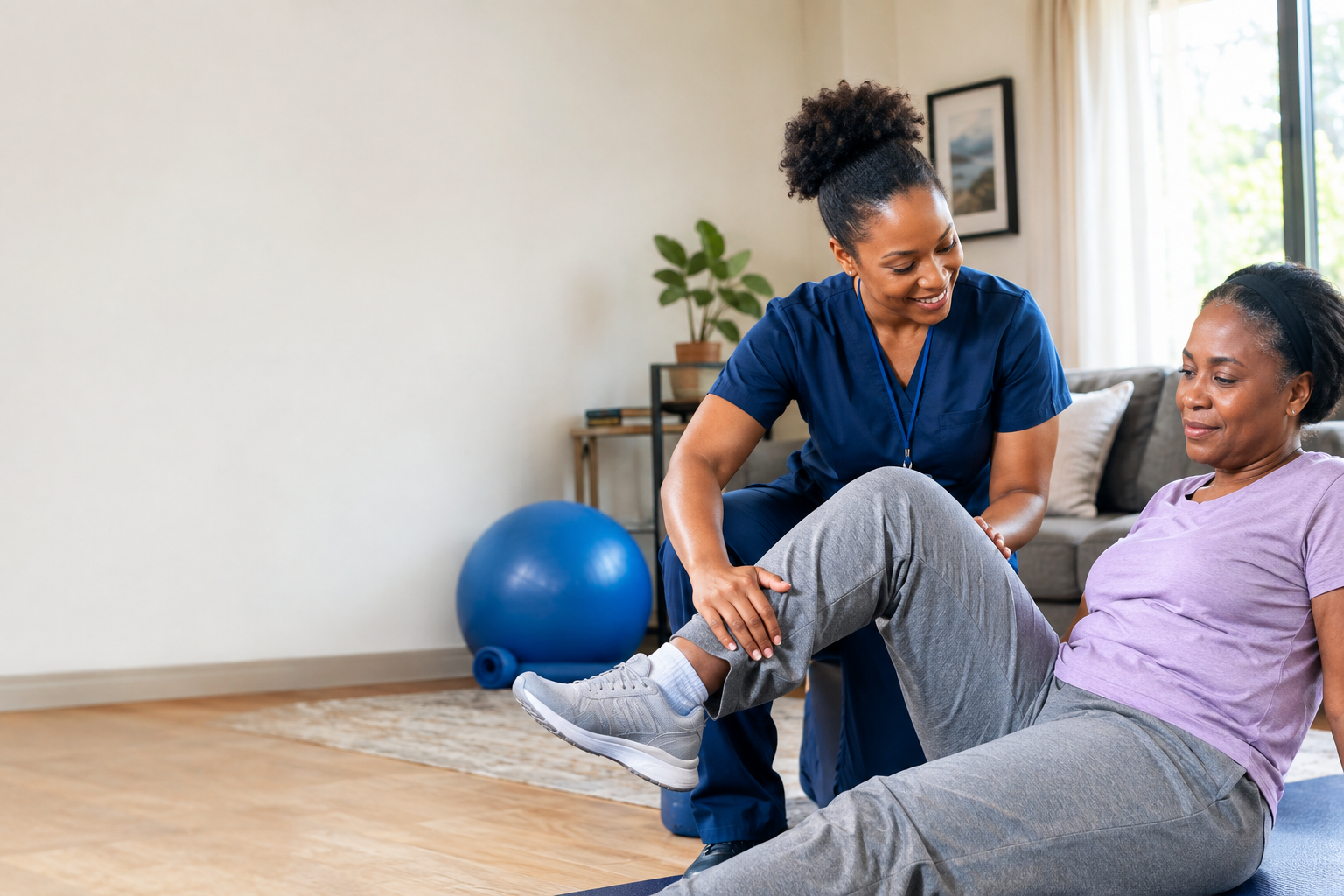
Home health practice imposes physical demands on clinicians that differ substantially from institutional practice settings, and that carry occupational injury risks that deserve the same systematic clinical attention that home health therapists apply to their patients’ musculoskeletal health. The home health therapist who lifts, transfers, and physically assists patients without the mechanical lift equipment, adjustable treatment surfaces, and additional staff assistance readily available in institutional settings, who carries equipment bags into and out of vehicles and patient homes multiple times daily, and who navigates the unpredictable physical environments of patient homes, narrow hallways, stairs, cluttered spaces, and inconsistent furniture heights faces a physical demand profile that produces meaningfully elevated musculoskeletal injury risk relative to clinic-based practice.
Body mechanics for patient transfers and mobility assistance in the home environment require specific adaptation because the equipment and environmental supports that reduce transfer-related injury risk in institutional settings are frequently unavailable in patient homes. The home health PT or OT assisting a significant-assist transfer without a mechanical lift, height-adjustable bed, or a second staff member to assist must rely on body mechanics technique, appropriate use of available equipment including gait belts and transfer boards, and the clinical judgment to recognize when a transfer exceeds safe manual assistance capacity and requires additional resources, whether caregiver assistance, adaptive equipment acquisition, or a modified treatment approach that reduces transfer demand rather than attempting an unsafe transfer that risks both clinician and patient injury.
Equipment carrying and vehicle-related physical demands accumulate across a home health clinician’s workday in ways that institutional practice does not replicate, because the home health clinician repeatedly lifts and carries treatment bags, exercise equipment, and other clinical supplies in and out of vehicles and patient homes multiple times daily, often navigating stairs, uneven walkways, and vehicle loading that institutional practice does not require. Ergonomic equipment bag design, appropriate load distribution, and body mechanics awareness specifically applied to these repetitive loading tasks which clinicians frequently do not consciously apply to equipment carrying in the way they apply body mechanics training to patient transfers, address an injury risk pathway that accumulates through repetition rather than presenting as a single high-risk event.
Vehicle-related driving demands, including the substantial daily driving time that geographically dispersed home health caseloads require, particularly in the sprawling geography of Houston and Southeast Texas discussed elsewhere in this series, carry both the acute injury risk of motor vehicle accidents and the cumulative musculoskeletal strain of prolonged sitting, vehicle ingress and egress, and the postural demands of extended driving that home health clinicians experience at rates that clinic-based practice does not produce. Vehicle ergonomics, including seat positioning and the postural breaks that extended driving periods should include, and defensive driving practices given the substantial driving exposure home health work requires, address occupational health dimensions of home health practice that deserve explicit clinical attention rather than assumption that driving is simply a neutral transportation requirement without health implications.
Awkward postures and confined workspace demands are pervasive in home health practice because patient homes frequently present treatment spaces that were not designed for clinical care, bathrooms too small for optimal clinician positioning during bathing or toileting assessment, bedrooms with furniture arrangement that restricts clinician access and body positioning, and the floor-level treatment positions that pediatric home health or floor transfer training frequently require. Home health clinicians who develop the clinical judgment to recognize when a treatment space genuinely limits safe clinician body positioning, and who adapt treatment approach, request environmental modification, or advocate for equipment that improves the treatment space’s ergonomic safety, protect their own occupational health in ways that generic body mechanics training focused on institutional treatment spaces does not always address.
Psychological and emotional occupational health considerations deserve inclusion in a comprehensive approach to home health clinician wellbeing, because the emotional labor of home-based practice discussed throughout this series. The intimacy of entering patients’ homes, the witness to suffering and loss that serious illness produces, and the isolation of practicing without immediate colleague support, constitutes an occupational health dimension alongside the physical demands this post has primarily addressed. Agencies and staffing partners that support clinician access to the case consultation, peer community, and reflective supervision discussed in the clinical mentorship content elsewhere in this series are addressing occupational health in its full physical and psychological dimensions.
Organizational responsibility for home health clinician occupational safety includes providing appropriate equipment, including gait belts and other transfer assistance devices, training clinicians in body mechanics specifically adapted to home environment challenges rather than assuming institutional body mechanics training transfers directly, and creating a clinical culture where clinicians feel supported in declining or modifying a treatment approach that presents genuine safety risk rather than feeling pressured to attempt unsafe transfers or treatment approaches to meet productivity expectations or avoid appearing unable to manage a case.
Humane Care Therapy Inc. is therapist-owned and OT-operated and our founder’s own clinical practice experience means clinician occupational safety is not an abstract policy consideration but a lived understanding of what home health practice actually demands of the body and the person providing care. We support the clinicians we deploy with appropriate equipment, body mechanics training specific to home health environments, and a clinical culture that respects clinician safety judgment. Call (281) 619-3771, email info@humanecaretherapy.com, or visit humanecaretherapy.com.