
Rheumatoid Arthritis and Lupus in Home Health: Joint Protection, Fatigue, and Flare Management for Autoimmune Patients
Rheumatoid arthritis and lupus belong to a group of chronic autoimmune conditions in which the immune system attacks the body’s own tissues, producing joint pain, swelling, fatigue, and, in lupus, inflammation that can reach the skin, kidneys, heart, lungs, and brain. Both diseases are far more common in women than in men, and lupus affects Black, Hispanic, and Asian women at higher rates than white women, which means that Houston’s diverse population generates a meaningful share of these referrals. Patients usually arrive in home health after a flare, a hospitalization, a joint surgery, or a period of inactivity that has left them weaker than before. Serving them well requires knowledge of how these diseases behave, because they rarely behave the same way two days in a row.
The defining feature of autoimmune rheumatic disease is fluctuation. Patients cycle between flares, when inflammation is active, and periods of relative quiet, and their function can change from one visit to the next. A therapist who assumes last week’s performance is today’s baseline will either push too hard during a flare or hold back needlessly during a good stretch. Assess the patient in front of you. Ask about morning stiffness and how long it lasts, since stiffness lasting more than an hour is typical of active inflammatory arthritis, and look for warm, swollen joints, new fever, a new rash, or unusual exhaustion. During a flare, gentle range of motion, rest, and joint protection are appropriate. Between flares, progressive conditioning builds the strength that protects the joints.
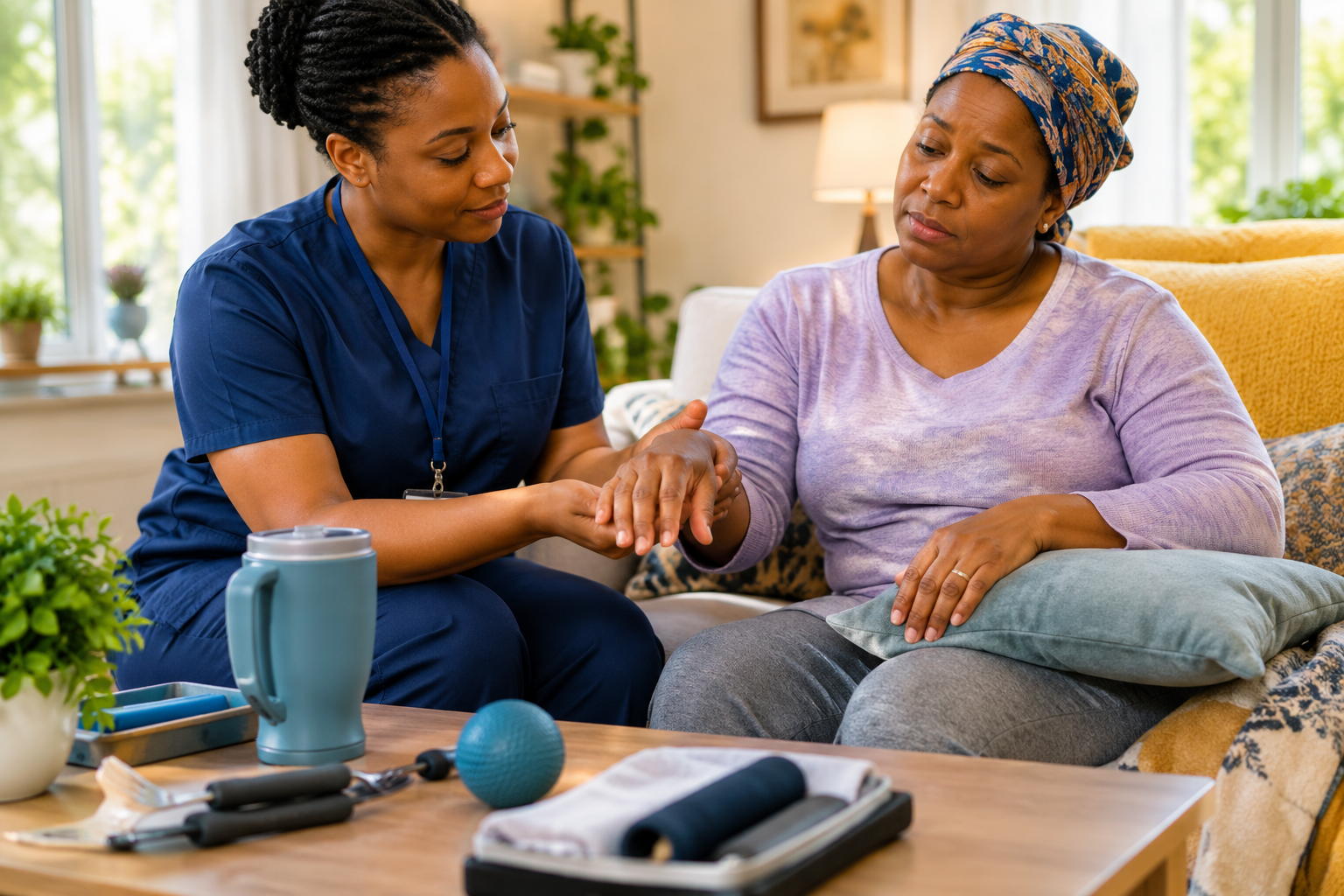
Joint protection is one of the most valuable things occupational therapy offers this population, and it is a skill that deserves to be taught rather than merely mentioned. The principles are practical. Respect pain as a signal rather than pushing through it. Use the largest and strongest joints available, such as carrying a bag on the forearm instead of gripping it with the fingers. Avoid prolonged gripping and positions that push joints toward deformity, such as the sideways drift of the fingers that rheumatoid arthritis can produce. Balance activity with rest, and break long tasks into shorter ones. Adaptive equipment makes these principles easy to follow: built-up handles, lever-style door handles, jar openers, electric can openers, and easy-grip kitchen tools reduce the force and repetition that stress inflamed joints. Resting hand splints and working splints, when ordered, protect joints and reduce pain, and the OT teaches the wearing schedule and checks the skin.
Exercise is safe and beneficial for most people with these conditions when it is dosed appropriately, and fear of making joints worse keeps too many patients inactive. Low-impact aerobic activity, strengthening for the muscles that support the joints, and balance training improve function, fatigue, mood, and cardiovascular health, which matters because both diseases raise cardiovascular risk. Progress gradually, watch for pain that lingers more than a couple of hours after activity, and scale back during a flare. One caution deserves attention: rheumatoid arthritis can involve the upper cervical spine, so new severe neck pain, numbness or tingling in the arms or legs, new weakness, or a change in bowel or bladder control should be reported to the physician promptly rather than treated as routine stiffness.
Fatigue is the symptom many patients describe as the most disabling, and it is different from ordinary tiredness. It does not reliably improve with rest, it can arrive suddenly, and it often accompanies a flare. Energy conservation and pacing, which this series has discussed for other conditions, apply directly here: plan the day around the patient’s best hours, alternate demanding and light tasks, schedule rest before exhaustion rather than after, and simplify the tasks that matter most. Sleep problems, pain, depression, anemia, and medication effects all contribute, so persistent or worsening fatigue deserves a conversation with the physician as well as a pacing plan.
Lupus adds considerations that therapists should know. Many patients are sensitive to ultraviolet light, and sun exposure can trigger a flare, which matters in a city with as much sun as Houston. Protective clothing, broad-brimmed hats, sunscreen, and scheduling outdoor activity away from midday hours are sensible advice. Raynaud’s phenomenon, in which fingers and toes turn white or blue in the cold, is common in lupus and related conditions, so keep patients warm and report any sores on the fingertips. Because lupus can affect the kidneys, heart, and lungs, new swelling in the legs or face, chest pain, shortness of breath, or a new fever are not routine findings and should be reported to the nurse or physician the same day.
Medication safety is a place where therapists can prevent real harm. Methotrexate, a common treatment for rheumatoid arthritis, is taken once a week, and taking it daily by mistake can be dangerous. If you see a pillbox or label suggesting daily use, tell the nurse immediately. Patients on corticosteroids face higher risks of bone loss, skin fragility, and bruising, which raises fracture and fall concerns, and patients on immunosuppressants and biologic medications are more prone to infection, so a fever deserves a prompt call and a clinician with a cold or cough should not make the visit. OT can assess whether a patient has the hand function to open bottles and use self-injection devices, and can suggest ways to manage them or ask the prescriber about alternatives.
The psychosocial burden of a chronic, unpredictable illness is substantial. Depression and anxiety are common, and the disease is often invisible, which means patients are sometimes doubted by employers, relatives, and even clinicians when they look well but feel terrible. Many are working-age women managing jobs, children, and caregiving alongside the illness. Medical social work addresses adjustment, work and disability questions, and the cost of specialty medications, including manufacturer assistance programs and community resources. Connection with the Arthritis Foundation and the Lupus Foundation of America offers education and peer support that many patients find valuable, and caregiver support helps families who live with the uncertainty of the next flare.
Humane Care Therapy Inc. is therapist-owned and OT-operated, and our clinical leadership regards joint protection, energy conservation, and adaptive equipment as core occupational therapy skills that make a daily difference for patients with autoimmune disease. We supply licensed physical therapists, occupational therapists, speech-language pathologists, and medical social workers to home health agencies across Houston and Southeast Texas. Call (281) 619-3771, email info@humanecaretherapy.com, or visit humanecaretherapy.com.