
How OT, PT, SLP, and MSW Keep Patients With Seizure Disorders Safe, Active, and Independent at Home
Epilepsy is one of the most common serious neurological conditions, and it shows up in home health more often than many clinicians expect. Some patients carry a lifelong diagnosis. Others develop seizures for the first time after a stroke, a traumatic brain injury, a brain tumor, or as dementia progresses, and in older adults, stroke and neurodegenerative disease are leading causes of new-onset epilepsy. Because a seizure can occur during any visit, every therapist who enters a home should know what a seizure looks like, what to do when one happens, and how to help a patient live safely and actively between episodes. Fear of the next seizure causes as much disability as the seizures themselves, and good therapy reduces both.
Begin by understanding the range of seizure types. Most people picture a convulsion, in which the whole body stiffens and jerks, but many seizures look nothing like that. A focal seizure with impaired awareness may appear as sudden staring, lip smacking, picking at clothing, wandering, or confused and unresponsive behavior lasting a minute or two. Absence seizures cause brief lapses in attention. Some seizures produce only a strange taste, a wave of fear, or a rising sensation in the stomach, and the patient remains alert. Older adults in particular are often misdiagnosed with dementia, delirium, or fainting when the real problem is unrecognized seizure activity, so a therapist who notices repeated, stereotyped episodes of blankness or confusion should describe them precisely to the nurse and physician, including duration, what the patient did, and how long recovery took.
Knowing how to respond to a convulsive seizure is the single most important safety skill. Stay calm and note the time. Move furniture and hard objects away from the patient, and cushion the head. Loosen anything tight around the neck. As soon as the convulsing stops, roll the patient onto one side so that saliva and vomit can drain and the airway stays open. Stay until the patient is fully awake and oriented. Do not hold the patient down. Do not put anything in the mouth, because a person cannot swallow the tongue and objects in the mouth cause injury and choking. Call 911 if the seizure lasts longer than five minutes, if a second seizure follows without recovery in between, if the patient is injured, pregnant, or has trouble breathing afterward, or if this is the first seizure the patient has ever had. Then report the event to the agency and document what you saw, objectively and in sequence.
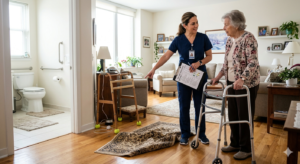
Home safety is where occupational and physical therapy contribute most. The bathroom is the highest-risk room, because water, hard surfaces, and the inability to call for help combine badly. Showers are generally safer than tub baths, and a shower chair, a hand-held shower head, and a door that opens outward or can be unlocked from the outside allow rescue if the patient falls. Padded or rounded edges on furniture, carpet or rubber flooring in place of tile in key areas, and the removal of glass items near the bed all reduce injury. Kitchen safety deserves the same attention: microwave cooking instead of open flames, back burners rather than front, and avoiding carrying hot liquids when seizures occur without warning. A patient who lives alone may benefit from a medical alert system or a seizure-detection device, and caregivers should know the plan for what to do and whom to call.
Medication adherence is the foundation of seizure control, and therapists are well placed to notice problems. Missed doses, running out of medication, confusion about a regimen, and cost barriers are among the most common reasons seizures return. Occupational therapy can set up pill organizers, alarms, and routines that fit the patient’s cognition and hand function, and the nurse can coordinate refills. Therapists should also be aware that some antiseizure medications cause dizziness, unsteadiness, sedation, double vision, and slowed thinking, which affect balance and fall risk, and that certain older medications weaken bones over time. A change in gait or alertness after a medication adjustment is worth reporting. Common seizure triggers are worth discussing as well, including missed sleep, alcohol, illness, and stress, and consistent sleep routines are among the most useful interventions a therapist can reinforce.
Staying active matters, and patients should not be told to avoid exercise. Regular physical activity is safe for most people with epilepsy and improves mood, sleep, and bone health. Common-sense precautions apply: avoid swimming or bathing alone, wear a helmet when cycling, and use supervision for climbing or heights. Physical therapy can build a program that respects the patient’s seizure pattern, and speech-language pathology may be needed when seizures or brain injury affect memory, language, and attention. Cognitive complaints are frequent and often undertreated. Memory aids, structured routines, and compensatory strategies make a meaningful difference, and the OT’s skill at matching task demands to cognitive ability is directly applicable.
Driving is a major concern, and it is often the largest threat to a patient’s independence. In Texas, the Department of Public Safety and the patient’s physician together determine when it is safe to drive after seizures, and rules generally depend on how long the patient has been seizure-free. Therapists should not decide fitness to drive, but they should know that the question matters and ensure that the physician has addressed it. When driving is not allowed, loss of mobility can mean loss of work, social contact, and confidence, so the medical social worker’s help with METROLift, ride programs, and community transportation is a clinical service, not an afterthought. Employment concerns, school accommodations, and disclosure decisions are other areas where social work and the Epilepsy Foundation of Texas offer education and support.
Stigma and emotional health round out the picture. People with epilepsy have a high rate of depression and anxiety, and many have faced misunderstanding or discrimination. Caregivers carry their own fear, and they need practical training and permission to rest. A calm, informed therapist who explains what a seizure is, what to do, and what not to do can lift a heavy burden from a household. Humane Care Therapy Inc. is therapist-owned and OT-operated, and our clinical leadership trains our therapists to treat seizure safety as part of ordinary home health practice, not a specialty exception. We supply licensed physical therapists, occupational therapists, speech-language pathologists, and medical social workers to home health agencies across Houston and Southeast Texas. Call (281) 619-3771, email info@humanecaretherapy.com, or visit humanecaretherapy.com.