How Home Health Agencies and Clinicians Prepare Medically Fragile Patients and Maintain Care Continuity Through Hurricane Season and Other Regional Disasters
Hurricane season is an operational and clinical reality that Houston and Southeast Texas home health agencies must plan for every year, not a hypothetical emergency scenario and the home health patient population, disproportionately composed of medically fragile, functionally limited, and often socially isolated individuals, faces disaster risks that the general population does not face to the same degree. Patients dependent on electrically powered medical equipment, patients whose medication regimens require refrigeration or precise timing, patients with limited mobility who cannot self-evacuate, and patients whose cognitive impairment affects their capacity to understand and respond to emergency instructions all require disaster preparedness planning that goes beyond generic hurricane preparedness guidance.
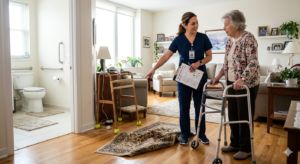
Patient-level disaster preparedness assessment is a clinical responsibility that home health therapy and nursing share, identifying the specific vulnerabilities that each patient’s medical and functional status creates in a disaster scenario. The patient on supplemental oxygen or other electrically powered medical equipment requires a specific power outage contingency plan backup battery capacity, generator access, or an evacuation plan to a location with reliable power identified and confirmed before hurricane season, not improvised during an approaching storm. The patient with mobility limitations who cannot navigate stairs or who requires assistance for transfers requires an evacuation plan that specifically accounts for their functional limitations, including transportation arrangements that can accommodate their mobility equipment and physical assistance needs.
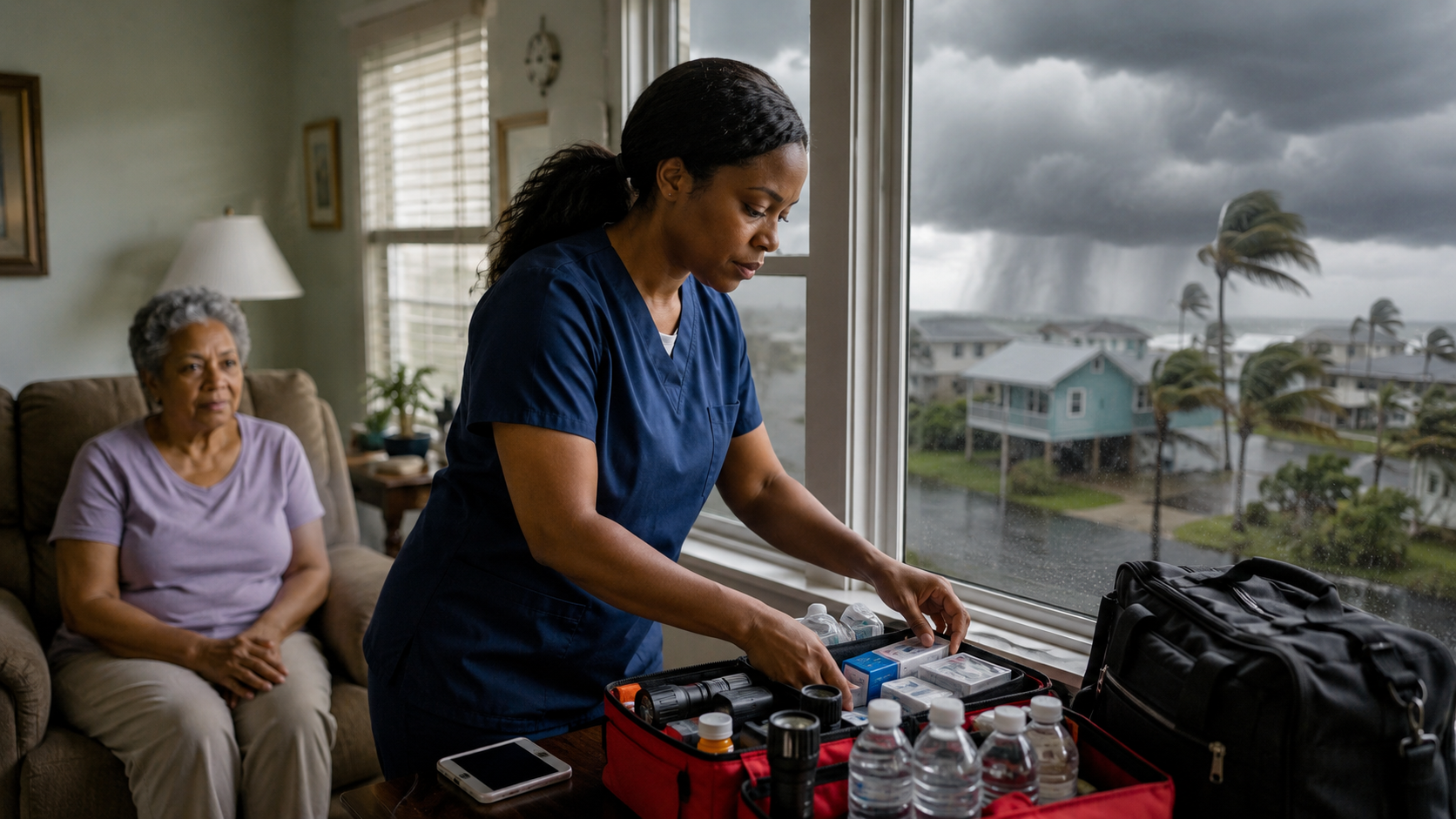
Medication and medical supply preparedness for home health patients requires specific clinical attention because hurricane evacuation or extended power outages can disrupt medication access, refrigeration for medications requiring it, and the medical supply chain that patients depend on for wound care, ostomy management, and other ongoing clinical needs. OT and nursing collaborative patient education about maintaining an emergency medication supply coordinating with pharmacies and insurance to secure the extended supply that disaster preparedness requires, understanding which medications require refrigeration and how to manage cold-chain medications during power loss, and organizing medical supplies in a readily transportable format addresses a preparedness dimension that many patients have not considered until a storm is already approaching.
Communication and check-in planning for home health patients during and after a hurricane addresses both the immediate safety verification and the care continuity that a disrupted service area requires. Agencies with clear protocols for patient contact before, during, and after a storm confirming evacuation status or shelter-in-place safety, verifying medication and medical equipment status, and identifying patients whose clinical status requires priority contact given their vulnerability provide the systematic check-in process that ad hoc post-storm outreach cannot replicate. MSW coordination of this communication process, with particular attention to socially isolated patients who may have no other check-in resource, addresses a population at elevated risk of falling through the cracks during disaster response.
Agency-level operational continuity planning determines whether a home health agency can sustain patient care through a hurricane or other regional disaster, and the planning that produces continuity requires investment well before disaster season arrives. Clinician safety protocols that establish clear criteria for when field visits are suspended for clinician safety, communication systems that function when standard infrastructure is disrupted, and clinical priority frameworks that guide which patients receive continued visits during a period of reduced service capacity and which patients can safely have visits postponed require advance planning and clear staff communication rather than improvised decision-making during an active storm.
Staffing continuity through disaster events is a specific operational challenge for agencies that depend on contract therapy staffing, because the clinician workforce itself faces the same evacuation, property damage, and personal disaster impact that patients face, and staffing plans that assume clinician availability without accounting for the disaster’s impact on the workforce itself produce unrealistic care continuity expectations. Agencies and staffing partners with pre-established mutual aid relationships, clear communication protocols for clinician availability status during and after a disaster, and flexibility in geographic assignment that allows available clinicians to be redirected to the areas of highest patient need produce more resilient staffing continuity than agencies without this advance coordination.
Post-disaster recovery clinical needs extend well beyond the immediate storm event, because the disruption of medical care access, medication supply, and daily routine that a hurricane produces frequently generates a secondary wave of clinical deterioration among home health patients the heart failure patient whose medication access was disrupted and who presents with decompensation weeks after the storm, the patient whose usual caregiver relocated or was displaced and who now faces a caregiving gap, and the patient whose psychological response to disaster experience includes anxiety, depression, or trauma symptoms that MSW clinical attention addresses. Home health teams that anticipate this secondary clinical impact and that conduct systematic post-disaster clinical reassessment rather than assuming patients have returned to their pre-storm baseline once the immediate emergency has passed identify and address the disaster’s lasting clinical impact.
Humane Care Therapy Inc. is therapist-owned and OT-operated, based in Houston and serving the Gulf Coast region that hurricane season affects every year. We provide OT, PT, SLP, and MSW staffing with disaster preparedness awareness for home health agencies across Houston and Southeast Texas. Call (281) 619-3771, email info@humanecaretherapy.com, or visit humanecaretherapy.com.
Looking for a therapy staffing partner for your home health agency? Learn more about our therapy staffing services in Houston.