What OT and PT Must Know to Protect Fragile Bones While Still Building Strength and Function
Osteoporosis weakens bone until a minor stress can cause a fracture, and it is far more common in older adults than most families realize. It affects women after menopause most often, but men are affected too, and long-term corticosteroid use, low body weight, smoking, heavy alcohol use, and several medical conditions raise the risk. The condition is silent until a bone breaks. The vertebral compression fracture, in which a spinal bone collapses, is the most common osteoporotic fracture, and many go unrecognized because the pain is blamed on a pulled muscle or arthritis. This post complements the content on hip fracture earlier in the series by focusing on the spine and on safe movement for fragile bones.
Suspect a vertebral compression fracture when an older patient develops sudden back pain after a minor event such as bending, lifting a bag, coughing, or sneezing, particularly if the pain is localized in the middle of the back, worse when standing or walking, and eased by lying down. Other clues include loss of height, a new forward curve of the upper back, and pain that does not improve over a few weeks. Report the finding to the physician so that imaging and treatment can be arranged. New leg weakness, numbness, or loss of bladder or bowel control are red flags that need urgent medical attention.
Protecting the spine means changing how the patient moves. Avoid bending forward under load, sit-up and crunch exercises, and twisting while lifting. Teach the hip hinge for picking things up, so the patient bends at the hips with a straight back, and log-rolling to get out of bed. Keep objects at waist height, use a rolling cart or backpack instead of carrying heavy items, and avoid lifting laundry baskets and grocery bags. Good body mechanics protect fragile vertebrae and, for caregivers, protect their backs too.
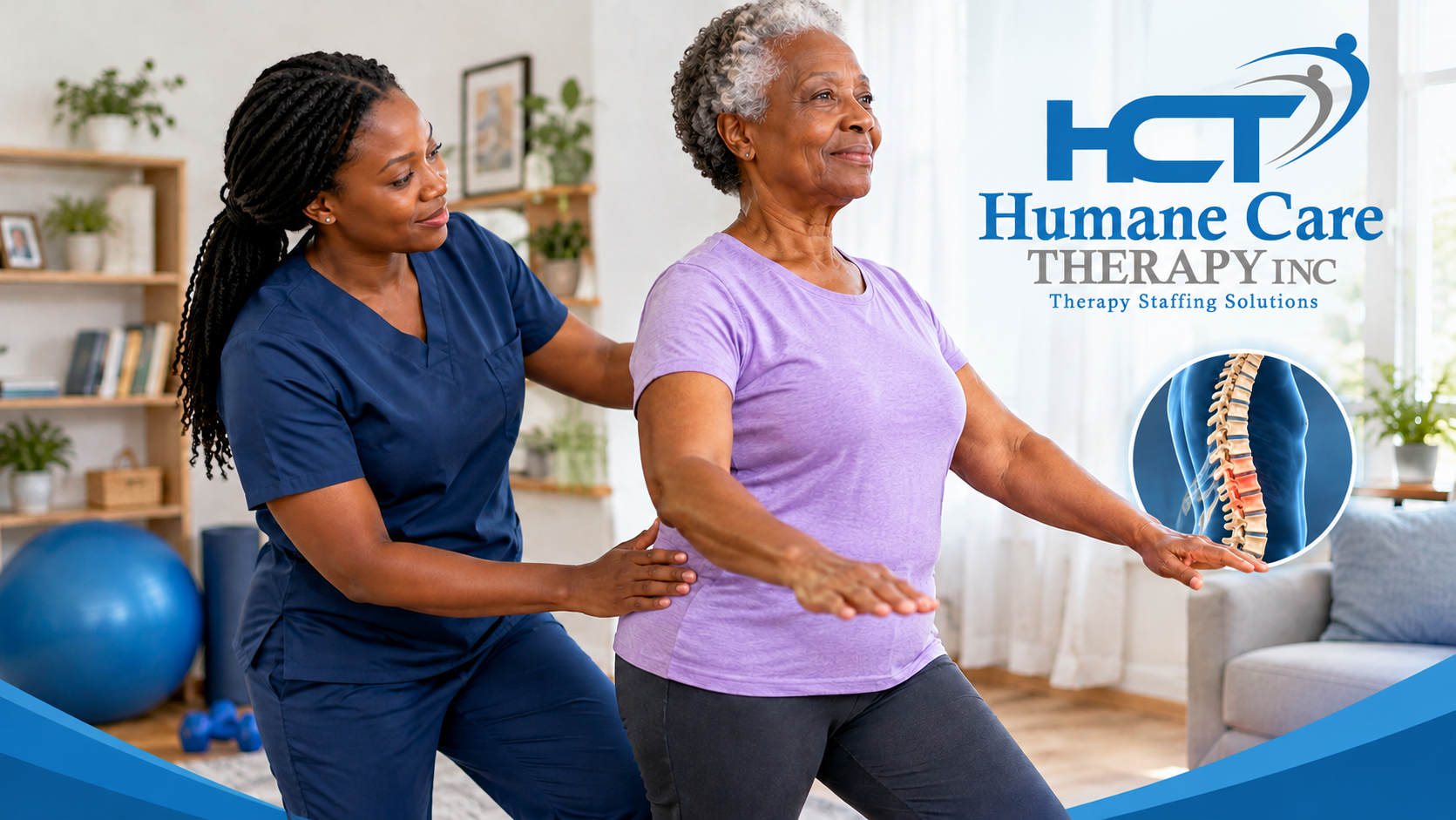
Exercise is part of the treatment, not the enemy of fragile bones. Weight-bearing activity and progressive resistance training support bone and muscle, balance training reduces falls, and strengthening the muscles that extend the back improves posture and has been associated with fewer vertebral fractures. A good program emphasizes thoracic extension, shoulder blade retraction, chin tucks, hip strengthening, and walking, performed with neutral spine control. High-impact activity and loaded spinal flexion are avoided in patients with significant osteoporosis, and the intensity is adjusted to pain and to the physician’s guidance. The goal is stronger, steadier, and more upright.
Some patients with acute vertebral fractures are prescribed a brace, and some receive pain medication or procedures from their physicians. Therapists support these plans by teaching patients how to put on and remove a brace, checking the skin under straps, and reinforcing the wearing schedule the physician orders. Pain control matters because untreated pain leads to inactivity, deconditioning, poor sleep, and lower mood. Positioning, pacing, heat or cold within the patient’s tolerance and your scope, and gradual return to activity help, while any worsening pain or new neurological symptoms should be reported.
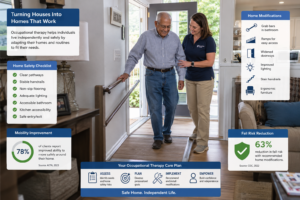
Occupational therapy makes the daily routine safer. Dressing, bathing, toileting, cooking, laundry, and getting in and out of the car all involve bending and twisting that can strain the spine. Adaptive equipment such as reachers, long-handled sponges, raised toilet seats, and shower chairs reduces the need to bend, and rearranging kitchens and closets so that frequently used items sit between hip and shoulder height removes much of the risk. As discussed in this series’ content on home safety assessment, the environment should be assessed with the patient’s actual movements in mind.
Most osteoporotic fractures follow falls, so fall prevention is fracture prevention. Check vision, footwear, lighting, blood pressure changes on standing, and medications that cause dizziness or sedation, and address balance, strength, and gait. Dizziness may have a treatable vestibular cause, as discussed in this series’ vestibular content. Patients with a prior fracture are at much higher risk of another, which makes a fall prevention plan essential rather than optional.
Therapists also help close a treatment gap. Many patients with a fragility fracture never receive osteoporosis evaluation or treatment, so ask whether the physician has addressed bone health, including bone density testing, calcium and vitamin D, and prescription therapy. Adherence matters; for example, certain oral bisphosphonates must be taken on an empty stomach with a full glass of water, with the patient staying upright for at least 30 minutes afterward. OT routines and reminders support correct use. Medical social work can address medication costs, transportation to bone density testing, fear of falling, and chronic pain, and can connect patients with education from the Bone Health and Osteoporosis Foundation.
Humane Care Therapy Inc. is therapist-owned and OT-operated, and our clinical leadership believes that protecting fragile bones means teaching patients how to keep moving safely, not telling them to stop. We supply licensed physical therapists, occupational therapists, speech-language pathologists, and medical social workers to home health agencies across Houston and Southeast Texas. Call (281) 619-3771, email info@humanecaretherapy.com, or visit humanecaretherapy.com.