
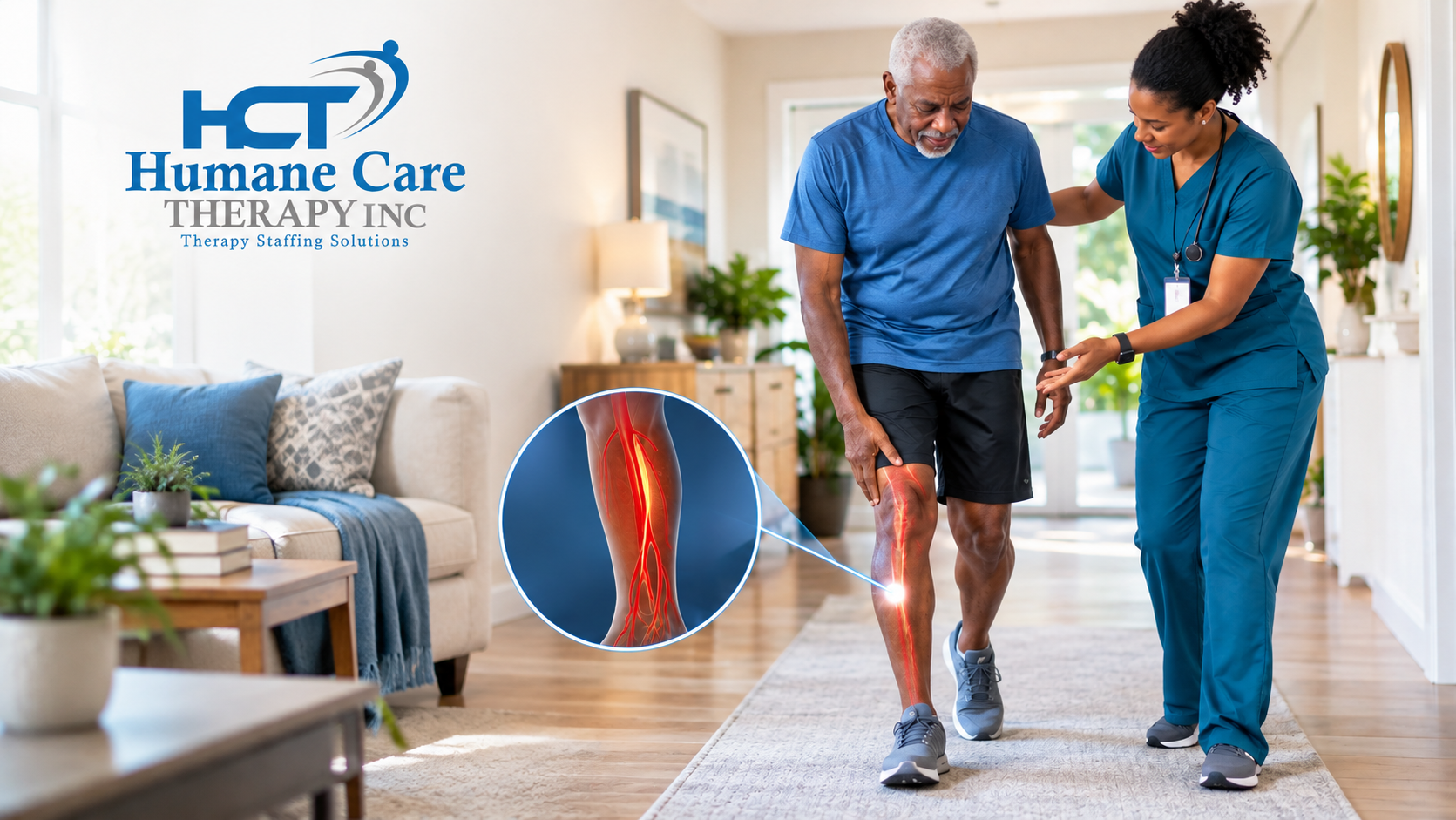
How PT and OT Address the Leg Pain, Foot Risk, and Functional Decline That Poor Circulation Produces
Peripheral artery disease occurs when plaque narrows the arteries that carry blood to the legs, and it affects millions of Americans. Diabetes, smoking, high blood pressure, high cholesterol, and age are the main risk factors, and Houston’s high rates of diabetes make PAD a common companion in home health patients. It is also frequently missed. Leg pain with walking is dismissed as aging or arthritis, and patients quietly cut back on activity until they can barely walk. The stakes are high, because PAD is a major pathway to nonhealing wounds and amputation, topics this series has addressed in its content on wound care and amputee rehabilitation.
The classic symptom is claudication: cramping, aching, or tiredness in the calf, thigh, or buttock that appears with walking and eases within a few minutes of rest, typically at a similar distance each time. It differs from the pain of spinal stenosis, which tends to ease with sitting or leaning forward, as on a shopping cart, and from arthritis pain, which is more variable and often present at rest. Therapists notice what physicians do not see: the patient who stops to rest every half block, who avoids the store, or who rests on the stairs. Ask about it. A patient with suspected PAD should be reported to the physician, who may order an ankle-brachial index test.
Exercise is among the most effective treatments for claudication, and walking programs improve how far and how comfortably patients can walk. Supervised exercise therapy delivered in a clinic setting has the strongest evidence and is covered by Medicare for symptomatic PAD, but many patients cannot reach a program, and structured home-based walking programs also help. The method is straightforward: the patient walks until leg pain reaches a moderate level, rests until it eases, and then walks again, building toward sessions of 30 to 45 minutes several times a week. A physical therapist teaches the pain scale, sets targets, monitors response, screens for heart disease symptoms, and adjusts the plan as walking improves.
Know the warning signs of limb-threatening disease. Pain in the foot or toes at rest, particularly at night, that eases when the leg hangs over the side of the bed, wounds that do not heal, and blackened or discolored skin suggest critical limb ischemia and need prompt medical attention. A sudden painful, pale, cold, numb, or weak limb, with a missing pulse, suggests acute limb ischemia and is an emergency requiring a 911 call. Report any new foot wound, color change, or loss of warmth to the nurse the same day, and document what you saw, including size, color, temperature, and location. Early action saves limbs.
Foot protection is part of every visit. Inspect the feet and between the toes, make sure shoes fit well and are worn indoors, and discourage walking barefoot. Avoid heating pads, hot water bottles, and hot foot soaks, because feet with reduced circulation and sensation burn easily. Leave nail and callus care to a podiatrist. Do not apply compression to a patient with known or suspected significant arterial disease without physician direction, because compression that helps venous swelling can worsen arterial insufficiency. This distinction matters in patients who have both venous and arterial disease, which is why the nurse and physician should clarify the circulation status before compression is used.
Positioning differs from the usual advice for swelling. Elevating the legs, which helps venous edema, can worsen pain in ischemic limbs because it reduces blood flow to the feet, and patients with rest pain often find relief by letting the foot hang down. Do not elevate an ischemic leg without guidance. Prolonged crossing of the legs, tight garments, and pressure on the heels should also be avoided. Understanding which kind of circulation problem a patient has changes what is safe, and a note that records the patient’s response to positioning gives the team useful information.
Risk factor control is as important as exercise. Stopping smoking is the single most effective step, and patients who want help can reach quit support through 1-800-QUIT-NOW. Blood pressure, blood sugar, and cholesterol control, and adherence to antiplatelet and statin medications when prescribed, reduce the chance of heart attack, stroke, and limb loss. Occupational therapy medication management assessment can uncover missed doses, and medical social work can address cost, transportation to appointments, and the depression that often accompanies declining mobility. Nutrition and weight management support the same goals.
The functional effects of PAD reach well beyond the leg. Patients avoid walking, lose conditioning, gain weight, become isolated, and face higher fall risk. Occupational therapy can support pacing and activity planning, suggest a rollator with a seat so the patient can rest during community outings, and help the patient plan routes with places to sit. Physical therapy can address gait, balance, and strength. Setting goals the patient cares about, such as walking to the mailbox, shopping for groceries, or attending church, keeps the program meaningful.
Humane Care Therapy Inc. is therapist-owned and OT-operated, and our clinical leadership recognizes PAD as a condition where early recognition and a structured walking program can change a patient’s trajectory. We supply licensed physical therapists, occupational therapists, speech-language pathologists, and medical social workers to home health agencies across Houston and Southeast Texas. Call (281) 619-3771, email info@humanecaretherapy.com, or visit humanecaretherapy.com.