A Reflection on the Extraordinary Strength of Home Health Patients — and What Clinicians Carry With Them From Those Encounters
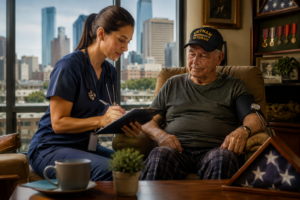
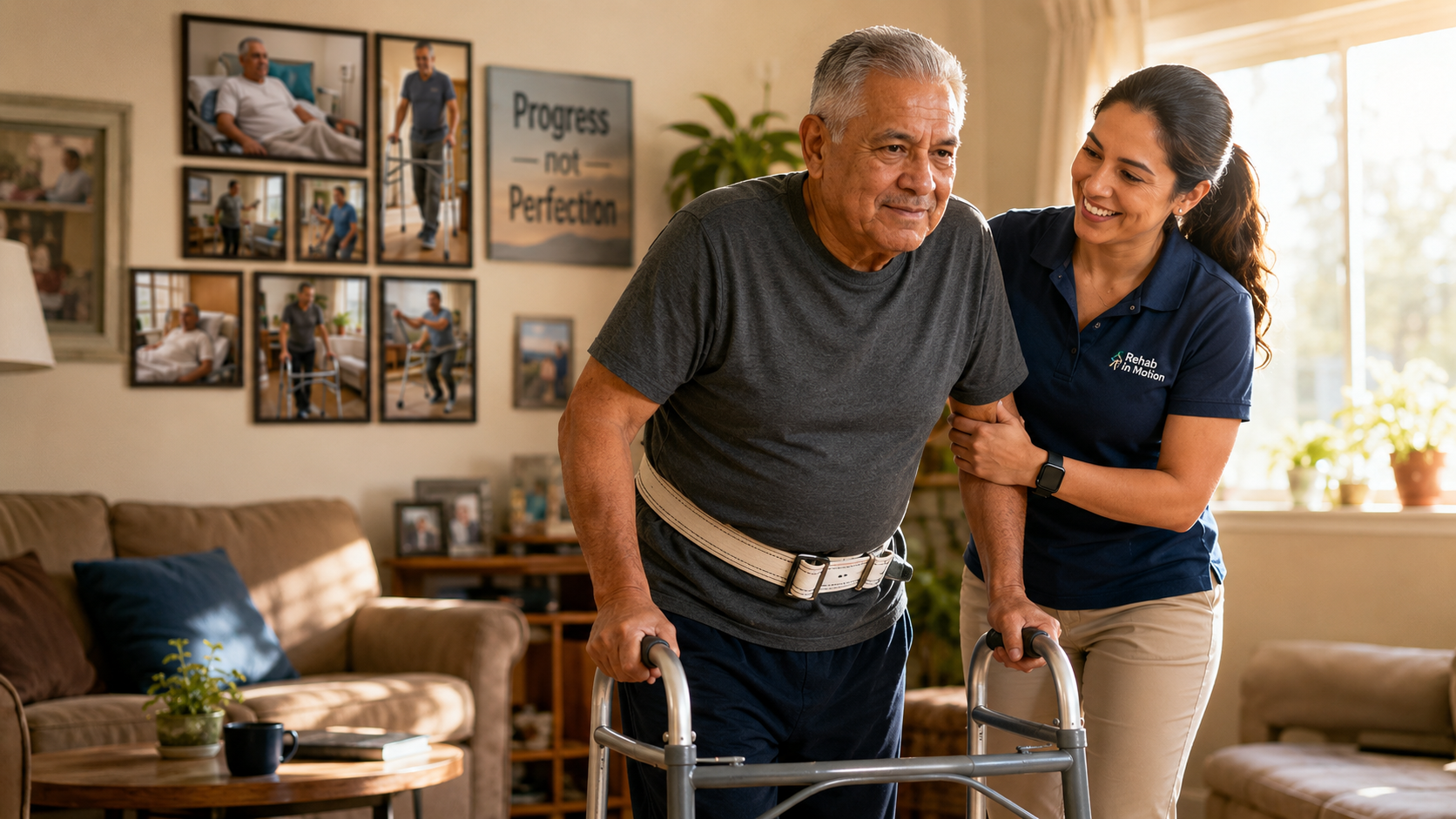
There is a particular kind of knowledge that only comes from entering someone’s home. Not a clinic, not a hospital room, not an outpatient office — but the actual physical space where a person has built their life, where their photographs hang, where their habits leave marks on the furniture, where their relationships with the people they love play out in the ordinary domestic rhythms that constitute a human life. Home health therapists enter these spaces every working day. They bring clinical skill, clinical tools, and clinical goals. They also carry away something that no classroom or training program provides: an intimate understanding of the extraordinary ordinary resilience that human beings bring to the most devastating circumstances.
I have been in the home of a 78-year-old woman who, three weeks after losing her leg to diabetic vascular disease, was already asking whether she would be able to plant her garden in the spring. I sat at the kitchen table of a 65-year-old man with progressive ALS who spent the first twenty minutes of our session showing me photographs from his recent vacation — a trip he had taken despite being unable to speak clearly and dependent on a power wheelchair for mobility, because he had decided that the disease would not take his capacity for joy before it took everything else. I have worked with a 52-year-old stroke survivor who relearned to button her shirt using her non-dominant hand over six weeks, crying with frustration after each failed attempt and returning with complete determination the next session, until the morning she called her daughter to come watch her get dressed independently and they cried together in the bedroom where I happened to be doing my documentation.
These are not exceptional patients. They are home health patients — individuals who have experienced devastating medical events, who are confronting permanent changes to their bodies and their lives, who are doing this confrontation at home rather than in an institution, in the most personal and unguarded space they inhabit, and who continue showing up to therapy sessions with a commitment to their own recovery that humbles every clinician who witnesses it.
Clinical training prepares therapists for the technical dimensions of home health practice. It teaches assessment tools, treatment approaches, documentation requirements, and the physiological knowledge that underlies clinical decision-making. It does not adequately prepare for the emotional experience of bearing witness to recovery — and sometimes to the limits of recovery — in the intimate context of home-based practice. Home health therapists develop this capacity on the job, and they develop it from the patients who teach them.
The lessons are specific and repeatable. The patient who continues to find meaning in the restricted version of activities they can still do, rather than fixating on the unrestricted version they can no longer perform, teaches something about the psychology of adaptation that no textbook conveys as powerfully as a single observed moment. The patient who maintains their sense of humor through circumstances that would reduce many people to despair teaches something about the relationship between suffering and joy that clinical training does not prepare for. The patient who chooses transparency about their fear and grief — who tells the therapist honestly that they are scared of falling again, that they grieve the person they were before the stroke, that they don’t know how to live in this altered body — teaches something about the courage of vulnerability that is its own form of clinical instruction.
Home health therapists also carry the weight of what they witness when resilience is challenged by circumstances beyond what individual human strength can address. The patient whose recovery is undermined by poverty — who cannot afford the adaptive equipment that would make the difference between independence and institutional placement, who skips medications because the copay is real and the benefits are abstract, whose home environment is a collection of hazards that no amount of clinical skill can make safe without repairs the patient cannot fund. The caregiver whose own health and emotional resources are depleted to a degree that should not be sustainable, who is providing care that genuinely exceeds what one person can safely provide but who has no alternatives and no relief. These encounters leave marks on clinicians who take them seriously, and they should.
The emotional labor of home health therapy — the consistent engagement with suffering, loss, fear, and the full weight of human vulnerability — is both the most meaningful aspect of the work and the dimension that, when unmanaged, produces the compassion fatigue that drives experienced clinicians out of the profession. Building emotional sustainability in home health practice requires intentional cultivation: clinical supervision that provides space to process the weight of clinical encounters, peer relationships with colleagues who understand the specific emotional landscape of home-based practice, professional development that includes psychological wellbeing as explicitly as clinical skill development, and the reflective habits that allow clinicians to honor the significance of what they witness without being consumed by it.
The agencies that understand this emotional dimension of home health therapy practice — that recognize clinical excellence and emotional wellbeing as inseparable rather than competing priorities — create working environments that retain the excellent clinicians who, in less supportive environments, eventually exhaust themselves into departure. They normalize conversations about the emotional weight of clinical work. They provide supervision that includes reflective space alongside quality monitoring. They recognize that the therapist who has genuine capacity for therapeutic relationship is the therapist who produces the best clinical outcomes — and that this capacity requires cultivation and protection, not just performance management.
For patients, the home health therapist who enters their home with technical skill, clinical knowledge, genuine respect for their autonomy and dignity, and the emotional presence to truly see them as a person rather than a case is providing something qualitatively different from adequate clinical care. This quality — the quality of genuine human engagement in the clinical encounter — is what patients remember, what families describe when they recommend an agency to a neighbor, what referral sources observe in the feedback they receive from discharged patients, and what underlies the patient satisfaction scores and quality metrics that ultimately determine agency success.
In 15 years of home health practice and staffing, the consistent finding is this: the patients who make the most remarkable recoveries are typically not the ones with the best prognoses or the most favorable social circumstances. They are the ones who encounter clinicians who genuinely believe in their capacity for recovery, who bring both clinical excellence and human presence to every session, and who create the kind of therapeutic relationship in which the patient feels seen, supported, and capable of more than they thought they were. That relationship — built in someone’s living room or bedroom or kitchen table, in the middle of their actual life — is what home health therapy uniquely offers.
Humane Care Therapy Inc. recruits OT, PT, SLP, and MSW clinicians who bring both clinical excellence and genuine human presence to the patients and families they serve across Houston and Southeast Texas. Because technical skill without relational quality produces adequate care. And our patients deserve excellent care. Contact us at (281) 619-3771 or visit humanecaretherapy.com.