Clinical Standards for Preventing Infection Transmission Between Patients and Protecting Both Patients and Clinicians in the Home Setting
Infection control in home health therapy practice presents distinctive challenges that differ substantially from infection control in institutional healthcare settings, because the home health clinician moves between multiple patient homes each day — each with different infection risk profiles, different environmental conditions, and none of the institutional infrastructure of hand hygiene stations, isolation precaution signage, and environmental services support that hospitals and clinics provide. Yet home health therapists serve some of the most infection-vulnerable patients in the healthcare system — immunosuppressed oncology patients, patients with chronic wounds, patients with indwelling medical devices, and medically fragile older adults — making rigorous infection control practice a clinical safety priority regardless of the environmental challenges home-based practice presents.
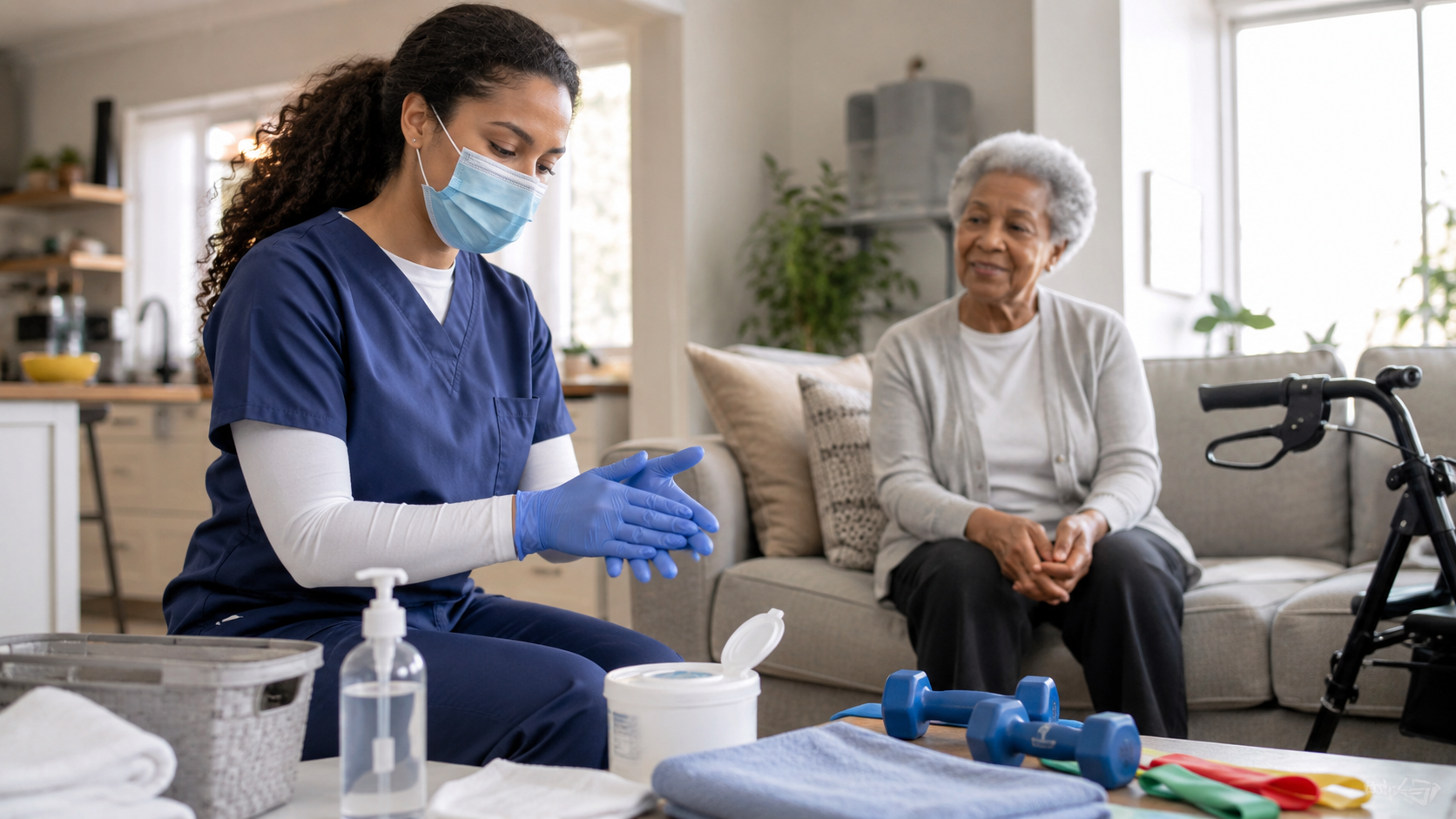
Hand hygiene remains the single most effective infection control intervention available to home health clinicians, and its practical implementation in the home environment requires specific clinical habits that hospital-based infection control training does not always address. The home health clinician who carries and consistently uses alcohol-based hand sanitizer before and after every patient contact — not just when visibly soiled hands make hand washing obviously necessary — and who performs hand hygiene at the specific transition points that carry the highest infection transmission risk, including before and after any wound care observation, before and after handling durable medical equipment, and immediately before leaving one patient’s home and before entering the next, is practicing the hand hygiene discipline that home-based practice specifically requires given the absence of institutional hand hygiene infrastructure.
Standard precautions — treating all patients’ blood and body fluids as potentially infectious regardless of known infection status — remain the foundational infection control framework for home health therapy practice, and their consistent application protects both the clinician and subsequent patients from infection transmission that inconsistent precaution use creates. Glove use for any contact with wounds, mucous membranes, or body fluids, appropriate glove removal and hand hygiene technique that avoids self-contamination during glove removal, and the consistent, non-selective application of standard precautions to every patient rather than a selective application based on assumed infection risk protect against the transmission risk that patients with unrecognized or undisclosed infections present.
Transmission-based precautions — the additional precautions required for patients with known or suspected infections that require contact, droplet, or airborne precaution beyond standard precautions — require home health clinicians to understand both the specific precaution requirements for common home health-relevant infections and the practical adaptation of these precautions to the home environment. The patient with a multidrug-resistant organism requiring contact precautions, the patient with active tuberculosis requiring airborne precautions, and the patient with an active respiratory infection requiring droplet precautions each present specific clinical scenarios that home health therapists must be prepared to recognize and respond to with appropriate personal protective equipment and clinical technique adaptation.
Equipment and supply infection control addresses the durable medical equipment, therapy tools, and clinical supplies that move between patient homes and that represent a specific infection transmission risk pathway that institutional settings, where equipment typically remains within a single controlled environment, do not face in the same way. Gait belts, goniometers, blood pressure cuffs, and any other reusable equipment that home health therapists carry between patient visits require consistent cleaning and disinfection protocols between each patient use — not periodic cleaning at the end of the day — using appropriate disinfectant products and adequate contact time for the specific pathogens of clinical concern. The therapist bag itself, which travels into every patient home, requires a specific management protocol — designated clean and potentially contaminated compartments, surfaces that can be effectively disinfected, and the discipline of not placing the bag on patient beds, furniture, or floors where environmental contamination risk is highest.
Wound-related infection control deserves specific clinical attention for home health PT and OT who observe and sometimes provide adjunctive care around wounds, because wound infection — including the multidrug-resistant organisms that colonize chronic wounds with meaningful frequency — presents both a direct infection risk to the clinician handling wound-adjacent equipment and dressings and a transmission risk to subsequent patients if equipment and hand hygiene practices are inadequate. Clinicians who observe signs of wound infection — increasing erythema, warmth, purulent drainage, or the characteristic odor of specific wound pathogens — should apply appropriate precautions for that visit even before formal infection confirmation, given the clinical prudence of precaution application preceding confirmed diagnosis in a setting where laboratory confirmation may take days.
Clinician health and vaccination status is a component of infection control that protects both the clinician’s own health and the vulnerable patient population home health therapists serve. Influenza vaccination, COVID-19 vaccination consistent with current CDC recommendations, and other recommended healthcare worker vaccinations reduce the risk that a clinician serving medically fragile home health patients becomes a vector for infection transmission to a population with elevated risk of serious complications from common infections that healthy adults tolerate without difficulty. Home health agencies and staffing partners that maintain clear expectations for clinician vaccination status and that support clinicians in staying current with recommended vaccinations protect the patient population that depends on clinician health for their own safety.
Humane Care Therapy Inc. is therapist-owned and OT-operated — and our clinical leadership holds every deployed clinician to rigorous infection control standards because our founder understands what home-based practice demands to protect medically fragile patients. We provide OT, PT, SLP, and MSW staffing with strong infection control practice standards for home health agencies across Houston and Southeast Texas. Call (281) 619-3771, email info@humanecaretherapy.com, or visit humanecaretherapy.com.
Looking for a therapy staffing partner for your home health agency? Learn more about our therapy staffing services in Houston.